
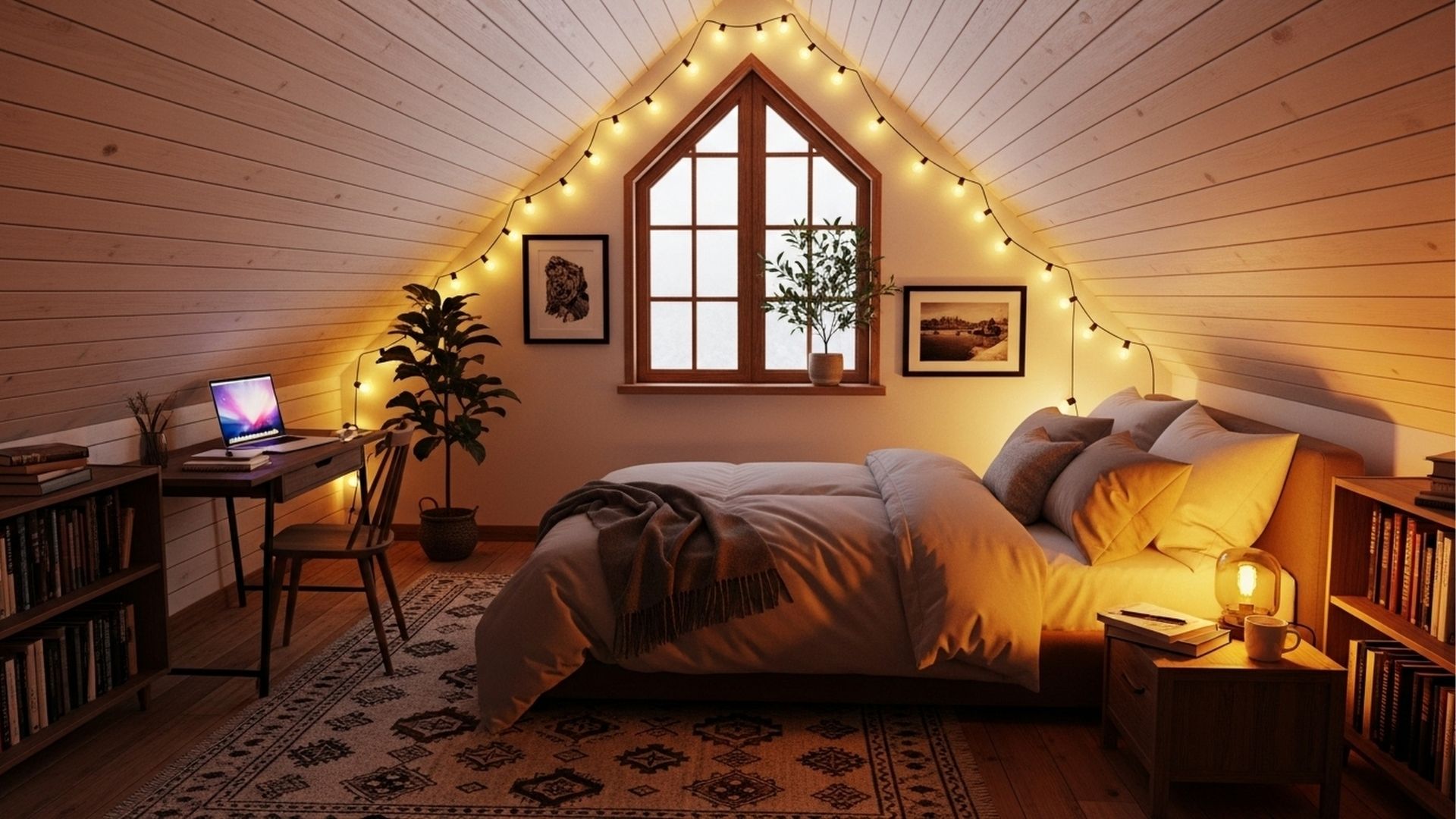
Turning an attic into a bedroom sounds charming until you are standing in the space wondering where the bed is even supposed to go. Low ceilings, slanted walls, and awkward corners can make the room feel more like a storage space than a place to sleep.
The good news is that attic bedrooms work best when you stop trying to design them like normal rooms. Once you make a few smart decisions, even the tightest attic can feel cozy, intentional, and surprisingly comfortable.
This guide breaks the process down into 7 design decisions that actually matter. No guessing, no overdecorating, and no ideas that only work in magazines.
7 Attic Bedroom Design Ideas
1. Start With the Right Bed Placement
:strip_icc()/CountryHome.McCann.5.10.1821375-bc759550a156482b9d52c214eb0b0302.jpg)
In a low-ceiling attic bedroom, bed placement is everything. Get this wrong and the room will always feel off.
The best place for the bed is almost always under the highest point of the ceiling. This gives you the most headroom where you need it most and keeps the room from feeling claustrophobic.
Avoid pushing the bed directly under the lowest slope if it forces you to crouch every time you get up. It might seem like a space saver, but it quickly becomes frustrating.
A good rule of thumb is simple. If you can sit up in bed comfortably without hitting the ceiling, you are in the right spot.
2. Choose a Low-Profile Bed That Fits the Space
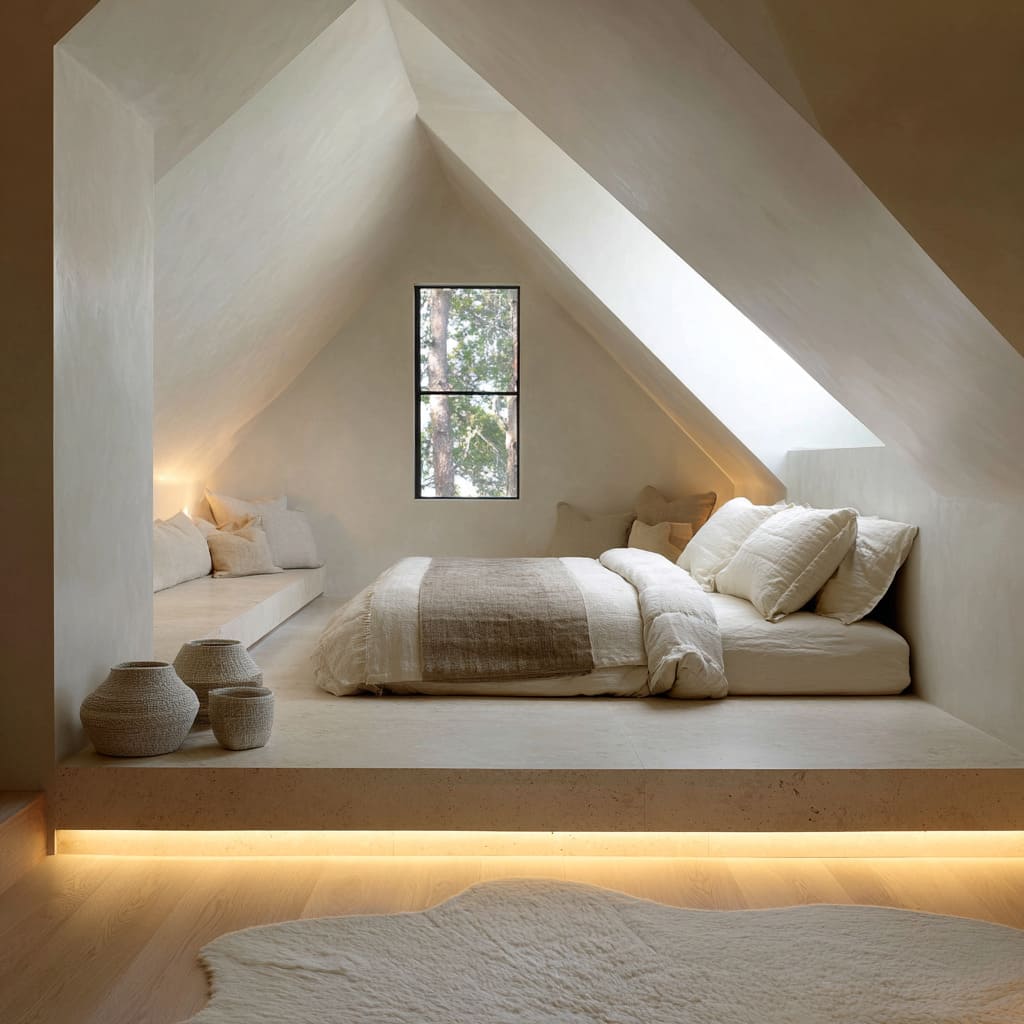
Tall beds and attic bedrooms do not get along.
A low-profile bed instantly makes the ceiling feel higher and the room feel calmer. Platform beds, low frames, or simple bases without bulky headboards work best here.
Skip anything oversized or ornate. Tall headboards, thick footboards, and heavy bed frames visually eat up precious space even if they technically fit.
When in doubt, measure the height from the floor to the lowest part of the ceiling and work backward. The more breathing room you leave above the bed, the better the room will feel.
3. Use Light, Warm Colors to Open Up the Room
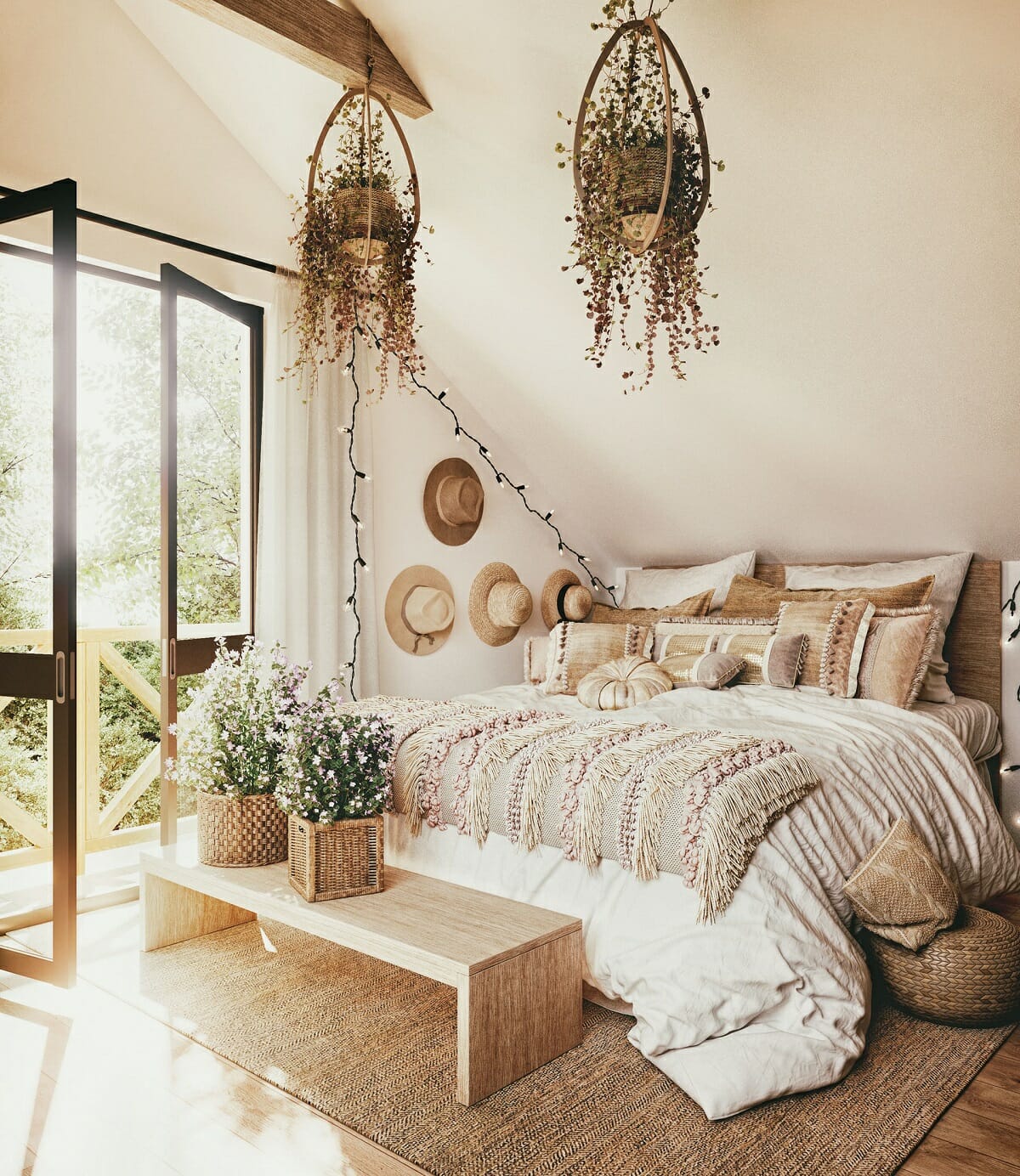
Color choice matters more in attic bedrooms than almost anywhere else in the house.
Light, warm tones reflect light and make sloped ceilings feel less heavy. Whites, soft creams, light beige, and warm greige tones are safe and effective choices.
That does not mean everything has to be plain. Texture and subtle contrast can still shine through bedding, rugs, and decor.
If you love darker colors, keep them grounded. Use them in bedding, accent pillows, or a single focal wall rather than wrapping the entire attic in dark paint.
4. Layer Your Lighting
:strip_icc()/fagusurbanatticbedroom-b9cf3ef6c69d412c9f311f28f59f0874.jpg)
Overhead lighting alone rarely works in attic bedrooms. Slanted ceilings often block light or cast harsh shadows that make the space feel smaller.
The solution is layered lighting.
Wall sconces beside the bed, table lamps, or small floor lamps create softer light and eliminate the need for bulky ceiling fixtures. Lighting placed at eye level or lower helps balance the room visually.
Warm bulbs are key here. Cool lighting can make an attic feel stark, while warm lighting instantly adds comfort.
5. Work With Slanted Walls
Slanted walls are not a flaw. They are the reason attic bedrooms feel unique.
Trying to decorate them like standard vertical walls usually leads to awkward furniture placement or clutter. Instead, let the angles guide your layout.
Keep slanted walls simple. A small piece of art, wood paneling, or even leaving them clean often looks better than forcing large decor into the space.
The more you embrace the shape of the room, the more intentional it feels.
6. Use Low-Height and Built-In Storage to Reduce Clutter
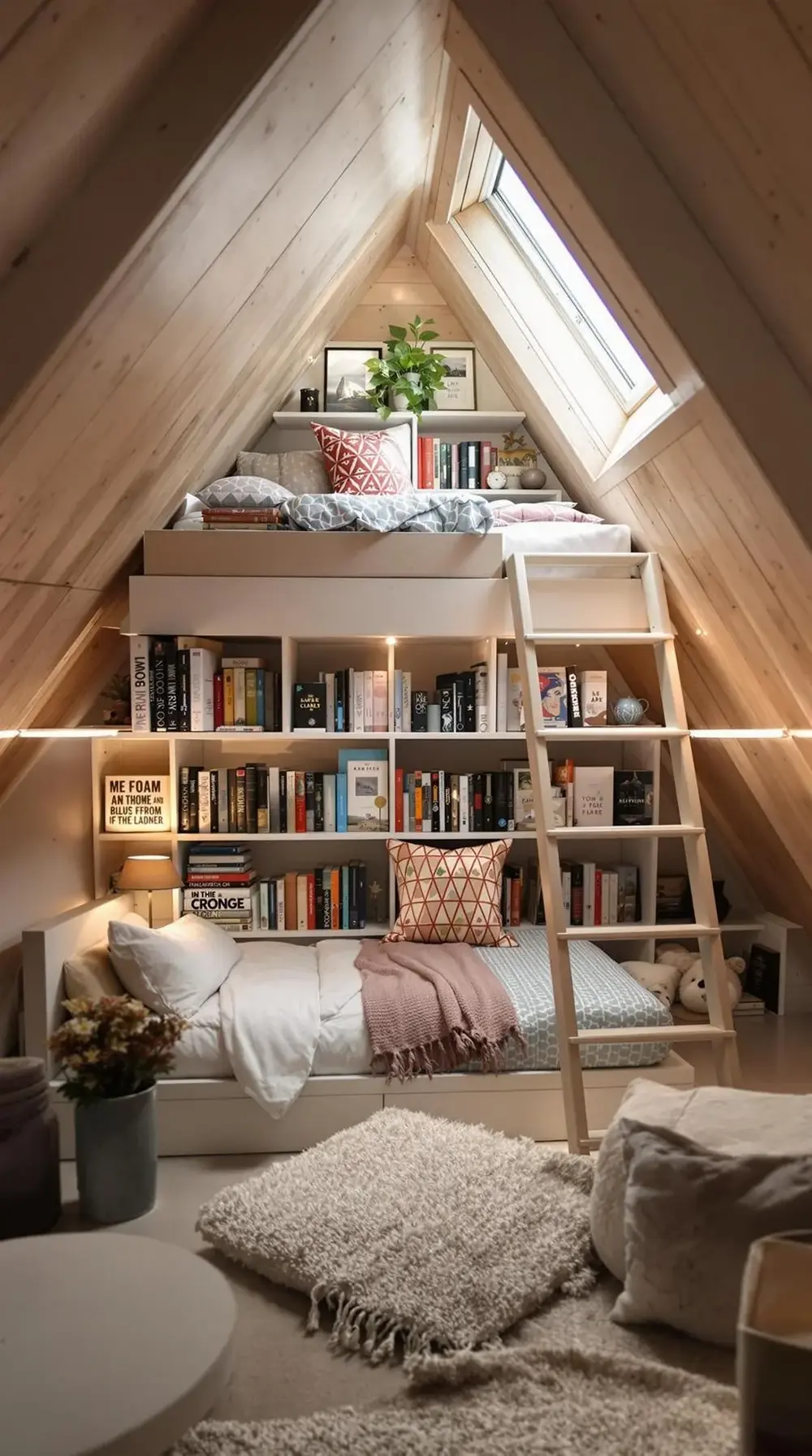
Storage can make or break an attic bedroom.
Tall dressers and bulky furniture overwhelm low ceilings fast. Low-height storage keeps the room grounded and visually open.
Under-bed drawers, built-ins along knee walls, and low-profile cabinets are ideal. They use space that would otherwise go to waste and keep the room feeling tidy.
The goal is to store what you need without stacking visual weight upward.
7. Finish With Cozy Textures
Attic bedrooms shine when they feel cozy on purpose, not unfinished.
Soft textures balance out the hard angles of the ceiling. Think layered bedding, area rugs, linen curtains, and upholstered accents.
Stick to a limited palette and repeat textures throughout the room. This creates warmth without clutter and keeps the design cohesive.
A cozy attic bedroom should feel like a retreat, not a compromise.
Final Thoughts
Low ceilings do not have to limit your attic bedroom. With the right layout, lighting, and a few intentional design choices, even the most awkward space can feel warm, functional, and inviting.
And if you try any of these ideas, I would love to see how your attic bedroom turns out.
For more cozy home décor inspiration and attic bedroom ideas, follow me on Pinterest!
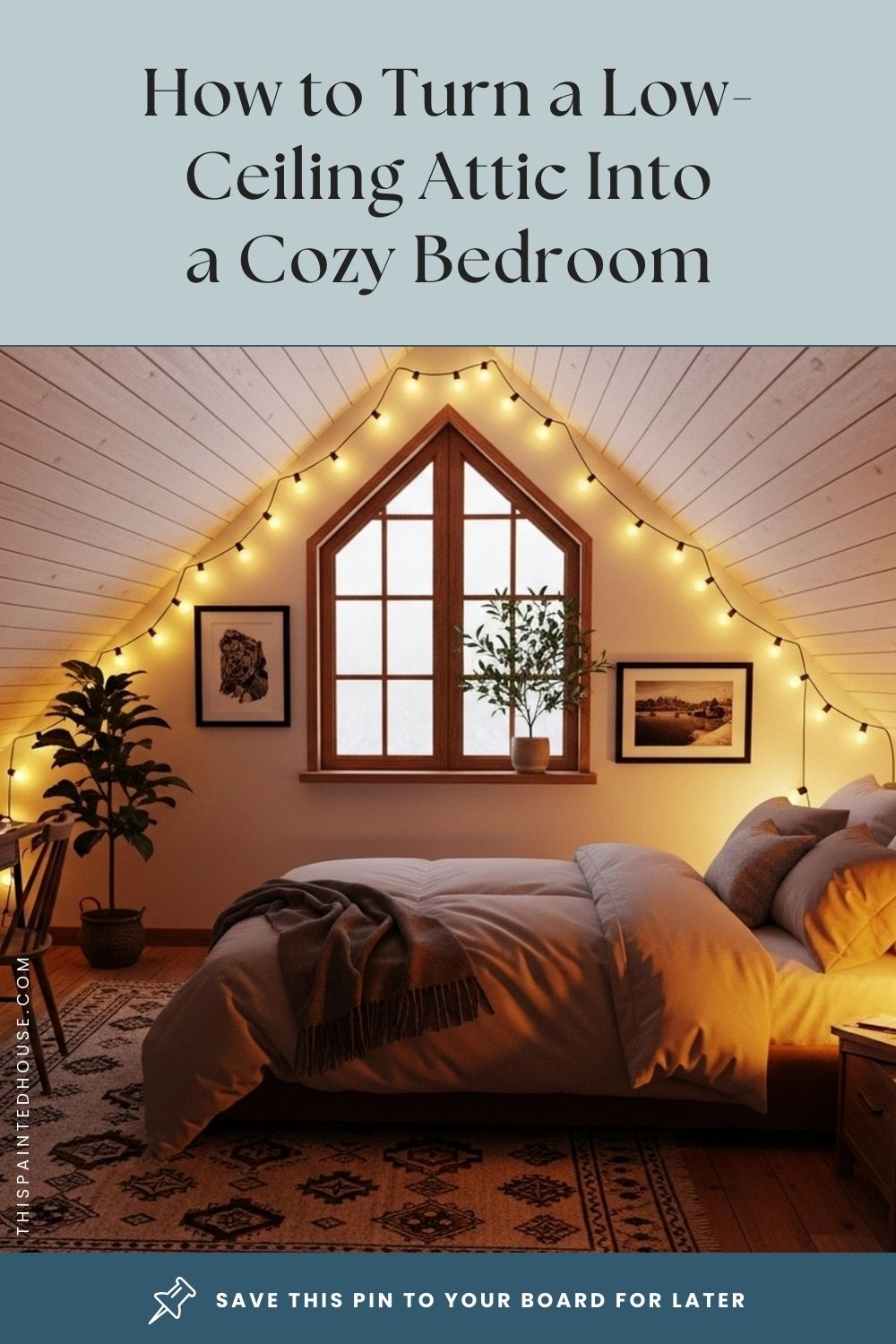
💡 Like this and want to save it for later? Hover over the image, then tap the Pin It button to save it to your board.